Atomic Cafe

Hi and welcome to our blog, specifically dedicated to the 1982 American documentary "The Atomic Cafe". Feel free to look through our blog in any way you like; but be sure not to leave out the atomic jukebox at the right sidebar...

Tuesday, November 16, 2010

Basic Film Information

The Atomic Café

Directed and produced by: Jayne Loader, Kevin Rafferty, Pierce Rafferty

Production Company: The Archives Project

Country of production: USA

Year: 1982


(Notable) Cast:

Harry S. Truman (as President Harry S. Truman)
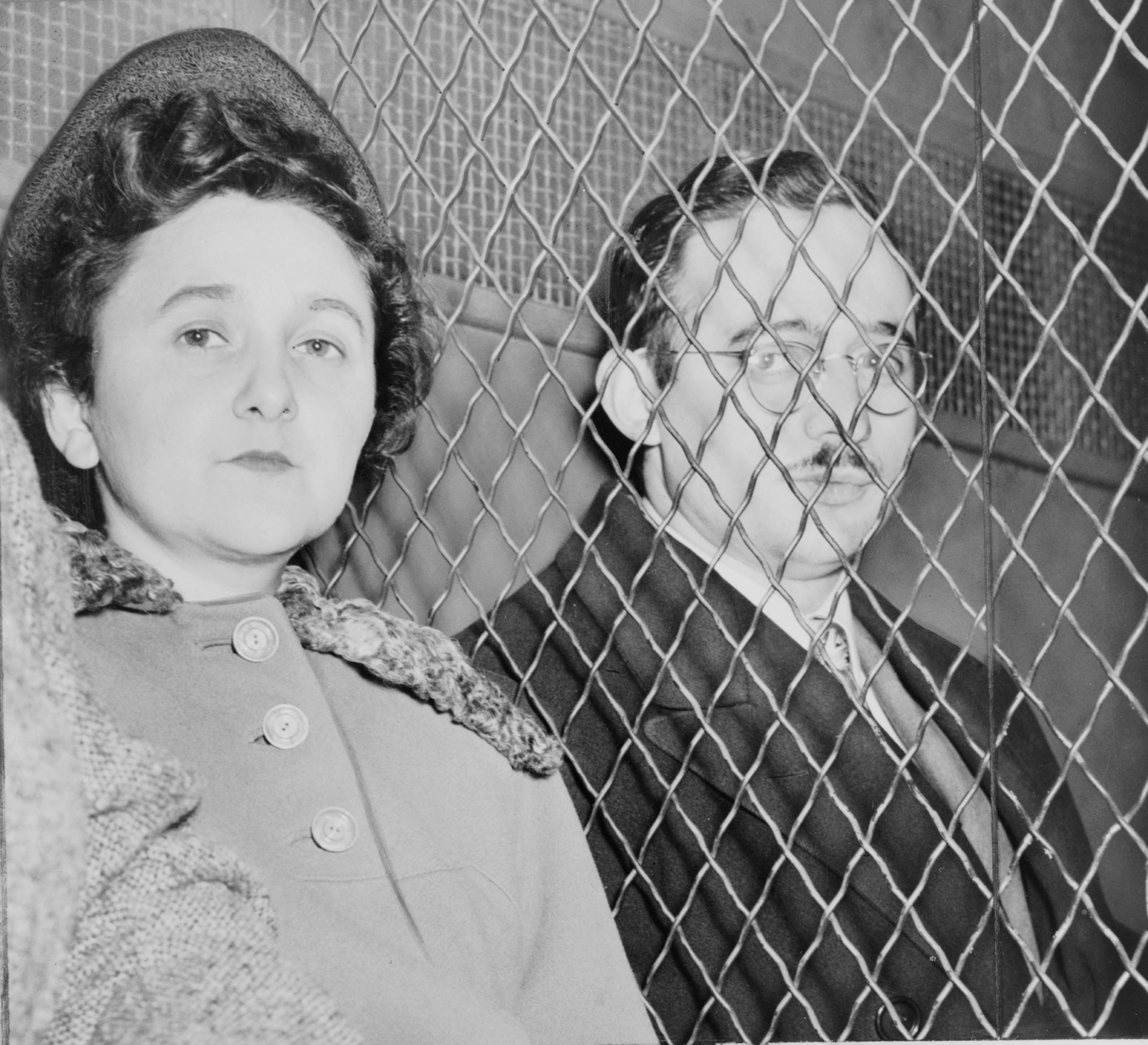


Julius Rosenberg
Ethel Rosenberg


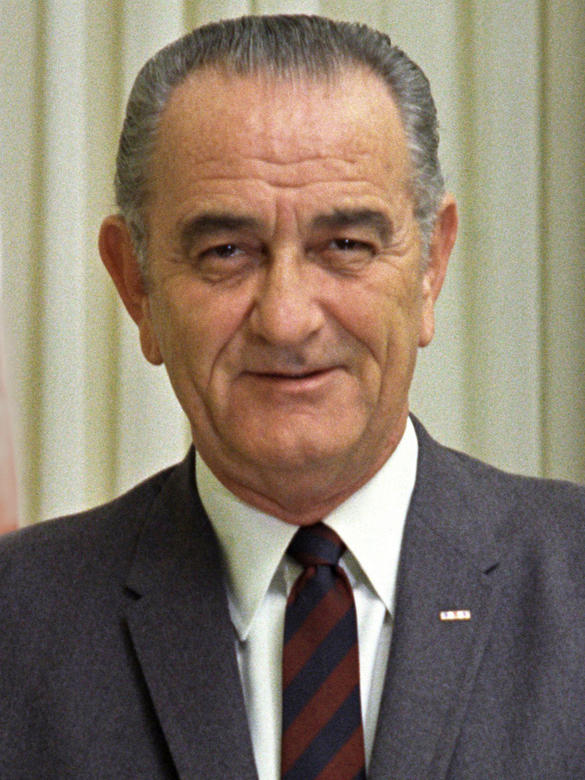
Lyndon Johnson (as Senator Lyndon B. Johnson)


Albert Einstein


Richard Nixon


Ronald Reagan


… and others.
(all as themselves, taken from archive footage)

Release dates:
USA – 17 March 1982 (New York City, New York)
Finland – 29 October 1982
West Germany – 5 November 1982
Netherlands – 11 November 1982
Sweden – 19 November 1982
France – 13 April 1983
Australia – 27 May 1983
Japan – 18 September 2004 (Tokyo)

Awards:
Nominated for the “Flaherty Documentary Award” at the British Academy of Film and Television Awards in 1983
Won the “BSFC Award” for “Best Documentary” at the Boston Society of Film Critics Awards in 1983

Excerpt:


***
The above information (film info, photos and video) were retrieved from the following websites:
The Internet Movie Database (IMDb)
Wikipedia, the free encyclopedia
Youtube

Sunday, November 14, 2010

Reflections on Atomic Cafe - Part 1

I mistakenly referred "movie" to an acclaimed classic cult documentary "atomic cafe" couple of times while i was doing my part in our group presentation causing confusion to the audience in the last blogger`s conference. My sincere apologies for causing that confusion. It does not really mean that i lack deep understanding of the documentary but due to time constraint i had to rush through all important points that i had to address and saying "movie" was easy instead of documentary...:) and i realized it was a big blunder !!

I want to share some of the scenes from this documentary and i hope this reflection gives you some idea about important messages the documentary wants to convey.
Firstly, i reckon the documentary was made in response to the policies of the US government of that time ( referring to Reagen Era) and his hostile stance in relation to the so called Evil empire (Soviet Union) he was propagating to the American public.

Interestingly, the documentary has no narration and made it in a way to speak for it self. Newsreels, adverts, other actual footages are cleverly weaved together and gives the viewer a perfect compiled documentary. Furthermore it is very humorous with funny atomic themed music. The following is an excerpt taken from the documentary . I would discuss some of the behaviors in that excerpt and other scenes in coming posts


I hope you enjoyed the music . The following is one of my favorite scenes from the documentary I want to highlight


The scene shows how soldiers were fooled to believe the radiation effects were the least thing that they had to worry about and they were commanded to move towards the blast and if they followed the commands correctly , they would be sound and safe. In the initial part of the documentary they do show some of the images of the radiation effect that killed and injured the people of Hiroshima and this scene becomes more like a satire and when a reporter in a voice over asks the soldier ` did u close your mouth ..` and the soldier replies ` i got a mouthful ` . The actual message it wants to convey in my opinion is that how stupid and misinformed were the generation of that time and questions the current generation and it s level of stupidity and it s naivety.

To be continued...

Friday, November 12, 2010

SOME OBSERVATIONS ABOUT 'THE ATOMIC CAFE'

‘The Atomic Café’ is said to be a satirical documentary film. As such I observed that it has some common characteristics with the film, ‘Dr. Strangelove’. Example of the satire in the film is the turtle displayed the “duck and cover” technique. Another is President Harry Truman plans of winning the World War II.

As in ‘Taiyo wo nusunda otoko’, ‘the beginning or the end’, and ‘the Manhattan Project’, ‘the Atomic Café’ present the ‘A’ or H-Bomb as a form of problem solving power. Example President Harry Truman delights of having the bomb first.

As a “compilation verite”, ‘the Atomic Café’ do relate to some of the films we studied in specific ways:
- In terms of family value, the Atomic Café is like the Manhattan Project, that is as Dr. Matheson, Paul, Paul’s Mom and girlfriend reunited at the end of the film, so as a family of three did and thank God after they survived the A-bomb attack on the U.S. Both films were made during the Reagan era.
- With regards, to reconciliation, it relates to ‘the Blast from the Past and Hachigatsu no Rapusodi(1991).
- As per the political factors, ‘the Atomic Café’ relates to ‘the Beginning or the End’, ‘Dr. Strangelove’ and ‘the Blast from the Past’. In all four of the films, I observed that there is a kind of race for the A-bomb or H-bomb between the USA and other outside powers like Russia and Japan.
- Fallout or Bomb shelters: ‘The Atomic Café’ as well as ‘the Blast from the Past and ‘Ikimono no Kiroku’ depict characters who wishes or used the bomb shelters for the protection of the family members. Example, Nakajima thought of a bomb shelter for protection in ‘Ikimono no Kiroku’.
- As in almost all of the films we studied, the special effect of the mushroom cloud is used in ‘the ‘Atomic Café’.

Uniqueness of ‘the Atomic Café’ film:
‘The atomic café” is said to be unique because it is a postmodern masterpiece and the single greatest collection atomic music ever assembled and released. Also the filmmakers kept away from narration and depended solely on their footage source. I also observed that amongst all the films we studied, ‘the Atomic Café’ is unique in that it is in this film the U.S. experienced atomic bomb attack where everyone tried to duck and cover.

Soundtrack

Tracklist:
    SIDE ONE:
  1. ATOM AND EVIL by the Golden Gate Quartet
  2. Audio Clip: Maj. Thomas Ferebee, "Enola Gay" bombardier, 08/15/45
  3. WHEN THE ATOMB FELL by Karl and Harty
  4. Audio Clips: President Harry S Truman, 08/09/45; Capt. Kermit Beehan, "Great Artiste" bombardier, 08/15/45
  5. WIN THE WAR BLUES by Sonny Boy Williamson
  6. Audio Clip: David E. Lilienthal, the first Chairman of the A.E.C.
  7. ATOMIC POWER by the Buchanan Brothers
  8. Audio Clip: Winston Churchill, 03/31/49
  9. JESUS HITS LIKE AN ATOM BOMB by Lowell Blanchard and the Valley Trio
  10. Audio Clip: Rep. James E. Van Zandt (Republican), Penn., 05/08/53
  11. WHEN THEY DROP THE ATOMIC BOMB by Jackie Doll and His Pickled Peppers
  12. ATOMIC SERMON by Billy Hughes and his Rhythm Buckeroos
  13. OLD MAN ATOM by Sons of Pioneers

Timeline of Events & Footages

Here is a comprehensive chronological record of the footages used in the film:

00:01-04:52
Pilot of Enola Gay, Paul Tibbets, recalls how the jet plane dropped the atomic bomb on Hiroshima

05:00-07:38
President Harry S Truman’s speech
Nagasaki’s bombing and mushroom shroud
Interview with captain of the jet plane about his ‘most outstanding moment’ of the bomb-dropping operation
Americans rejoicing with news of the Japanese surrender

07:38-08:15
Radio programme making fun of the horrific state of Hiroshima after the bomb

08:15-09:00
Paul Tibbets talks about the selection of ‘virgin targets’ in Japan for the sake of ‘bomb blast studies’

09:00-09:39
Bomb victims and their injuries at the Nagasaki Infectious Hospital

09:39-10:20
Paul Tibbets talks about the US’s ‘guilt complex’

10:20-11:18
American citizens on parade
White people having fun on roller coasters in 1946; white people dancing, being in love, getting married

Thursday, November 11, 2010

Cinema Studies of 'The Atomic Cafe'

I have come to learn that in reference to cinema studies perspective, ‘the Atomic Café’ is about the nuclear warfare. It is a documentary film which depicts events between the 1940s and 1960s to the audience. In Atomic Café, there are set of other A-Bomb films we studies recently as well as those of the cold war such as the Korean War, Cold war spy film, U.S. Army training films and parts directly from the U.S. Government Archives, etc. Example: part of the ‘inside of the plan that dropped the A-bomb on Hiroshima’, the special effect of the mushroom cloud, the picture of the burnt city of Hiroshima as in ‘the beginning and the end’ film and the pictures of the fallout shelters in the film, ‘the blast of the past’. As per the music, the film contains some songs of the cold war and soundtrack of the atomic bomb [“atomic bomb baby”]. After five years of work, in October of 1982, “The Atomic Café” was produced by Jayne Loader, Kevin and Pierce Rafferty in English. It is also confirmed that this firm was released during the Reagan era, at the climax of the international disarmament movement. As such, the production of the film received wide distribution till it became a cult classic. It is believed that the project of “the Atomic Café” film may have cost about $300.000

Conclusively, ‘the Atomic Café is said to be a "compilation verite", a film which is made up of no new footage, no voice of God narration, rather a set of other films as mentioned above. [Atomic Café: History Done Right]

Wednesday, November 10, 2010

Scar of memory-My comment of the Atomic Cafe


This is a film of the atomic culture that was star in the America and still popular now, from the film we can see the people at that time try to built a lot of funny things with the atomic bomb, they make the music they make it became the food and drink, the car the bar the cloth the novel… a lot people was falling love with the atomic bomb and the culture it bring to us. But we still can see another sense that every rich American should have a yard with a shelter that can protect them from the fall out, the government try to make citizen pay more attention on the nuclear attack from the USSR.
This is a time period with a lot things cannot give a clearly definition that it is a good period or bad period just as the atomic bomb. I should said that as Chinese I should said that I should thanks for the bomb and also as a person like game and film also should say thanks for the atomic bomb and the culture it brings to. But when we see the film about what should to when you attack by the nuclear weapon, and the US people spend a lot of money to built a shelter, even the people who live in the Nagasaki and Hiroshima, could us still said that is a good time the atomic bomb is good weapon.
Atomic Café just show us at that time the people’s thinking and the fear of the atomic weapon, even the US people make it become culture but everyone knows that they were under the shadow of the atomic attack this is also the same situation with the USSR people. Though this documentary I saw the scar of the memory for the people at that special time. But they bring us the happy till now which is the atomic culture.
The country wants institution of the supremacy by the nuclear weapon but it bring to the people a scar in their mind, may by when we play game or watch film try to think more about them.